Wolf Range Repair
How to Clean Wolf Cast Iron Grates and Burner Caps
Clean Wolf cast iron burner grates once they are fully cool: carry them to the sink, wash with hot water and mild dish soap or a baking soda paste, scrub with a non-scratch pad, then dry them completely before they go back on the range.
Rafael Monteiro Cooking-appliance technician — ventilation and blowers · 9 years in the trade
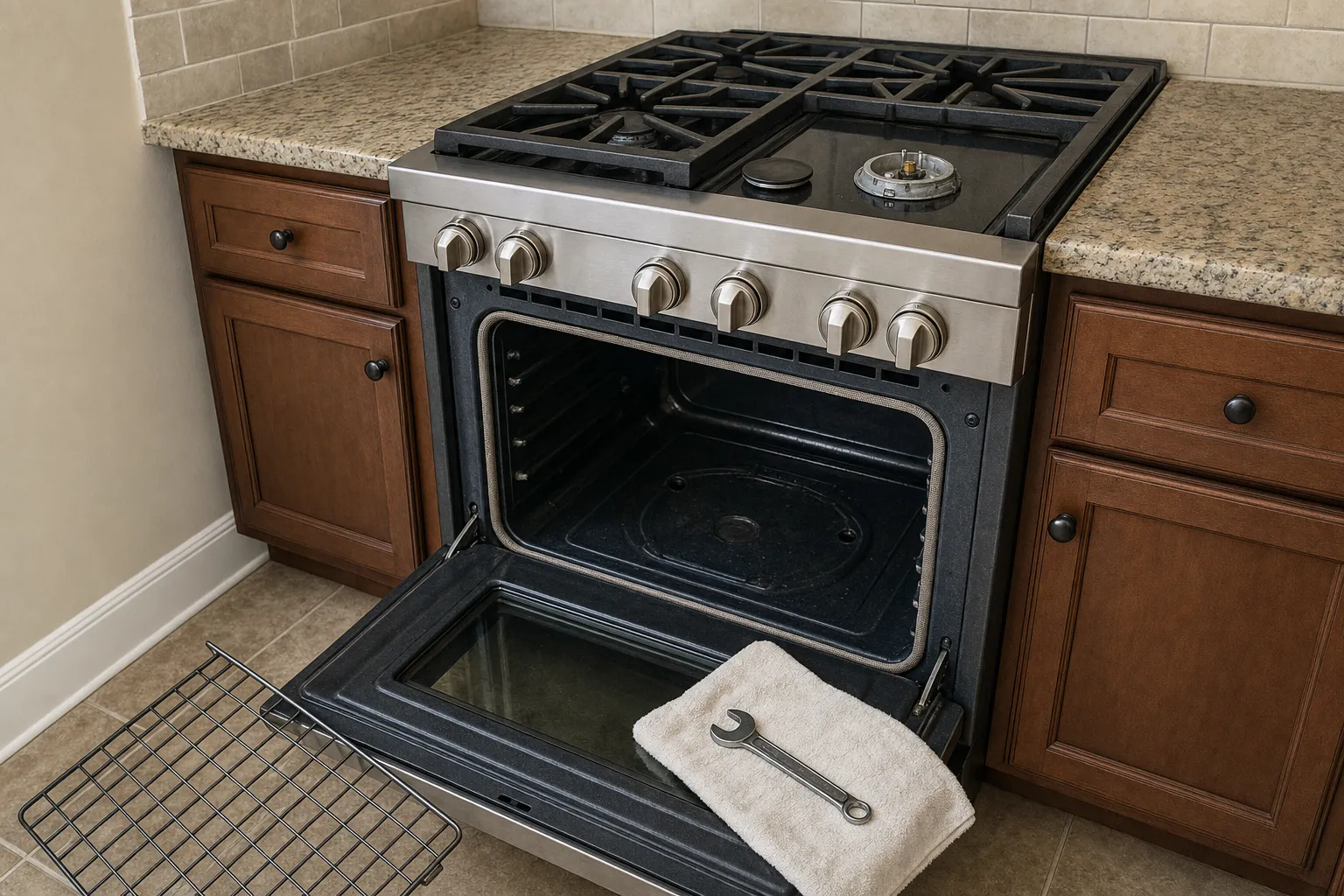
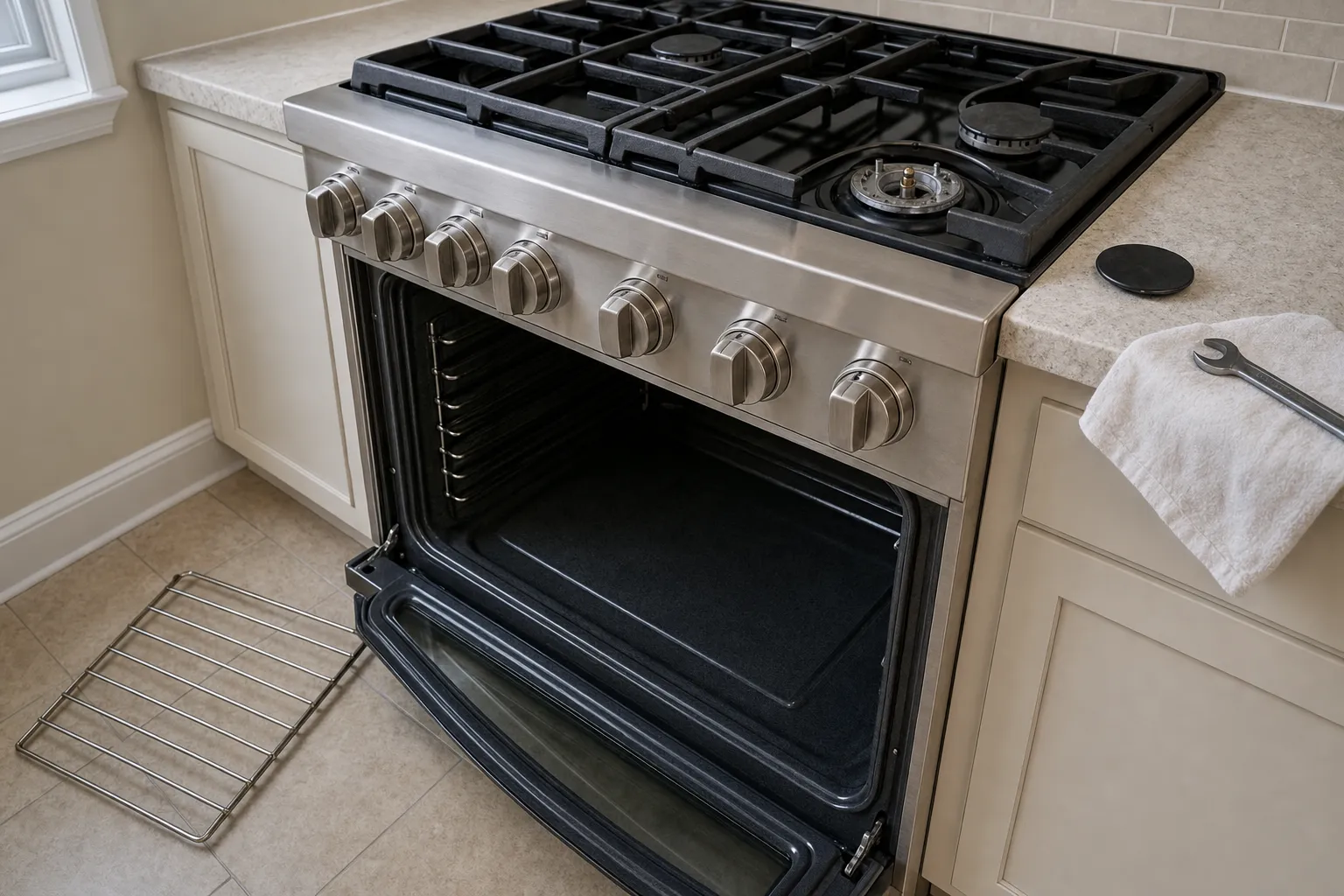
To clean the cast iron grates on a Wolf burner, let them cool completely, lift them off, and wash them at the sink with hot water and a mild dish soap. For anything baked on, spread on a paste of baking soda and water, give it time, then scrub with a nylon brush or a non-scratch pad. Rinse, towel every surface dry, and only then set the grates back on the range. Skip the overnight soak: Wolf’s own care instructions say to wash grates without immersing them. Drying is the step most people rush, and in Kirkland, where kitchens stay cool and damp through the long rainy season, a grate put back wet can freckle with rust anywhere its coating has chipped.
Why these grates are not a skillet
Wolf grates are heavy cast iron with a dark coating over the metal, and that coating is what you are protecting. A bare iron pan wants oil and shrugs off a metal scraper; a coated grate wants neither. Oil wiped onto the grate just turns gummy under the next flame, while steel wool, scouring powder or oven cleaner wears the coating thin until raw iron shows through.
The sections are also heavier than most people expect. Lift each one with both hands, and lay a folded towel in the sink or on the counter first, because a grate dropped on stone or porcelain can chip itself and whatever it lands on. If your range has continuous grates that lock together, look at how they sit before you lift them, so they go back level and your pans do not rock.
The sink routine, step by step
- Turn every knob off and wait until the grates are cool enough to hold bare-handed.
- Lift them out and rest them on a towel beside the sink.
- Wash with hot water and a few drops of mild dish soap, working a nylon brush into the corners where the arms meet.
- For brown, baked-on film, stir baking soda with just enough water to make a paste. Spread it over the stain, leave it to work while you wipe down the cooktop, then scrub.
- Rinse until no grit remains, since dried paste leaves a chalky haze.
- Towel-dry every face, including the feet and the underside. If you want to be certain, stand them on a drying rack for a while before they go back.
While the grates are off: caps, heads and igniters
With the grates out of the way you can finally see the sealed burners. Lift the burner caps, wash them at the sink the same way, and dry them before they return. Wipe the burner bases with a damp cloth. If food has crusted into a port, a straightened paper clip clears it; avoid wooden toothpicks, which can snap off inside.
The small white igniter beside each burner is ceramic and brittle. Wolf says a visibly dirty igniter may be cleaned gently with a soft-bristle toothbrush, and that is where owner care stops. An igniter that is cracked, broken or loose in its mount needs a technician rather than more scrubbing.
Reseat each cap so it rests flat and centered on its head. A crooked or still-wet cap is the usual reason a burner clicks without lighting right after a cleaning. If yours keeps doing that once everything is dry and seated, our guide to a Wolf burner that clicks but will not light covers the next checks. Keep spray cleaner away from the knobs as well; mist that drifts behind them can reach the spark switches and leave every burner clicking until the moisture is gone.
Griddle, charbroiler and control panel
Some Wolf ranges carry more than burners, and each extra surface has its own method.
| Surface | How to clean it |
|---|---|
| Charbroiler | Run it for 10 minutes after cooking to burn food off, then cover the cooled grate with wet towels and hot water and let it soak before scrubbing. This grate can go in the dishwasher. |
| Griddle | Now and then, take the plate back to bare metal: pour on 1/2 cup (120 ml) of warm water mixed with 1 teaspoon (5 ml) of griddle cleaner, scrape whatever lifts into the grease tray, and give it a fresh coat of oil after it dries. |
| Dual fuel control panel | Touch and hold Lock for 3 seconds first, then spray degreaser onto a cloth instead of onto the panel. |
Wipe the control knobs with a damp cloth too. Wolf’s cooktop instructions rule out the dishwasher for them.
What to keep away from the grates
- Steel wool, scouring powder and abrasive sponges
- Oven cleaner and other harsh chemical sprays
- The oven’s self-clean cycle, which is meant for the oven cavity and not for cooktop parts
- Long soaks in a full sink of water
- Putting grates back while any part of them is still damp
When cleaning will not fix it
A good wash sorts out most grimy grates and lazy flames, but not every problem is dirt. A flame that stays yellow or lifts away from the burner after the ports are clear points to air or orifice trouble, and our page on yellow or lifting Wolf burner flames explains what each sign means. Nonstop clicking, burners that refuse to catch, or a knob that turns stiffly are jobs for a technician.
Wolf Repair Kirkland takes those calls across Juanita, Houghton, Totem Lake and Bridle Trails. Typical ranges are $180–$440 for igniter or spark module work and $240–$580 for burner valve or orifice service. The firm price comes after diagnosis. A flat $89 covers the visit and the whole diagnosis, and if you approve the repair that $89 is taken off its price. Call (425) 699-2400 or use the booking button on this page, or read more about our Wolf range repair service.
Common follow-ups
Is it safe to run Wolf cooktop grates through a dishwasher?
Wash them by hand instead. Wolf's cooktop care instructions call for hot water with mild detergent, or a baking soda paste, at the sink without submerging the grates. The one grate Wolf does list as dishwasher safe is the charbroiler grate on ranges that have one.
What removes burnt-on grease from Wolf grates?
A thick paste of baking soda and a little water does most of the work. Spread it over the dark patches, give it time to soften the residue, then scrub with a nylon brush and rinse. Repeat on stubborn spots rather than reaching for steel wool or oven cleaner, which can dull or chip the coating.
Why does my Wolf range keep clicking after I cleaned it?
Usually water is still sitting under a burner cap or has drifted onto the spark switches behind the knobs. Dry the caps and heads, set each cap flat and centered, and give the range a few hours. Clicking that carries on once everything is dry points to an igniter or spark module that needs a technician.
How often should Wolf grates get a full wash?
Give them a full sink wash whenever you can see buildup, and right after any boil-over or greasy sear. Between washes, a soapy cloth on cool grates keeps spatter from baking on, and baked-on spatter is what turns a quick rinse into a long scrubbing session.